
Saturday, October 10, 2026
My Son Sanctuary offers a glimpse into the ancient Champa Kingdom, set in a quiet valley surrounded by mountains in Central Vietnam. Once an important religious center, the site is now known for its red-brick temple ruins, detailed carvings, and peaceful natural setting. Recognized as a UNESCO World Heritage Site, My Son is a worthwhile stop for travelers interested in history, culture, and off-the-beaten-path experiences. In this GTrip guide, you’ll find everything you need to plan your visit and practical tips to make your trip smoother and more meaningful.
Table of Content
- Overview of My Son Sanctuary
- What makes My Son Sanctuary unique?
- The history of My Son Sanctuary
- Unique and mysterious Cham architecture
- Things to do at My Son Sanctuary
- How to get to My Son Sanctuary?
- Accommodation when traveling to My Son Sanctuary
- Nearby attractions to the My Son Sanctuary
- Practical tips for visitors when visiting the My Son Sanctuary
Overview of My Son Sanctuary
Before embarking on your journey to the ancient Champa Capital, it is essential to understand the geographical, logistical, and environmental context of this World Heritage site. The following sections provide a comprehensive overview to help you navigate your visit to My Son Sanctuary with ease and confidence.
Where is My Son Sanctuary?
Location: My Son Village, Thu Bon Commune (formerly Duy Phu Commune, Duy Xuyen District, Quang Nam Province), Da Nang City
My Son Sanctuary lies in a quiet valley surrounded by mountains, at the foot of the sacred Cat’s Tooth Mountain (Mhadravata). Once the religious and political center of the Champa Kingdom, it offers a meaningful glimpse into a civilization that has long disappeared, with its temples still set in their original natural setting.
Located in the former Quang Nam Province, the sanctuary is easy to reach from Central Vietnam’s main travel hubs. It’s about 45 km from Hoi An Ancient House center, around 69 km from Da Nang City center, and roughly 145 km from Hue City, making it a convenient day trip from any of these cities.
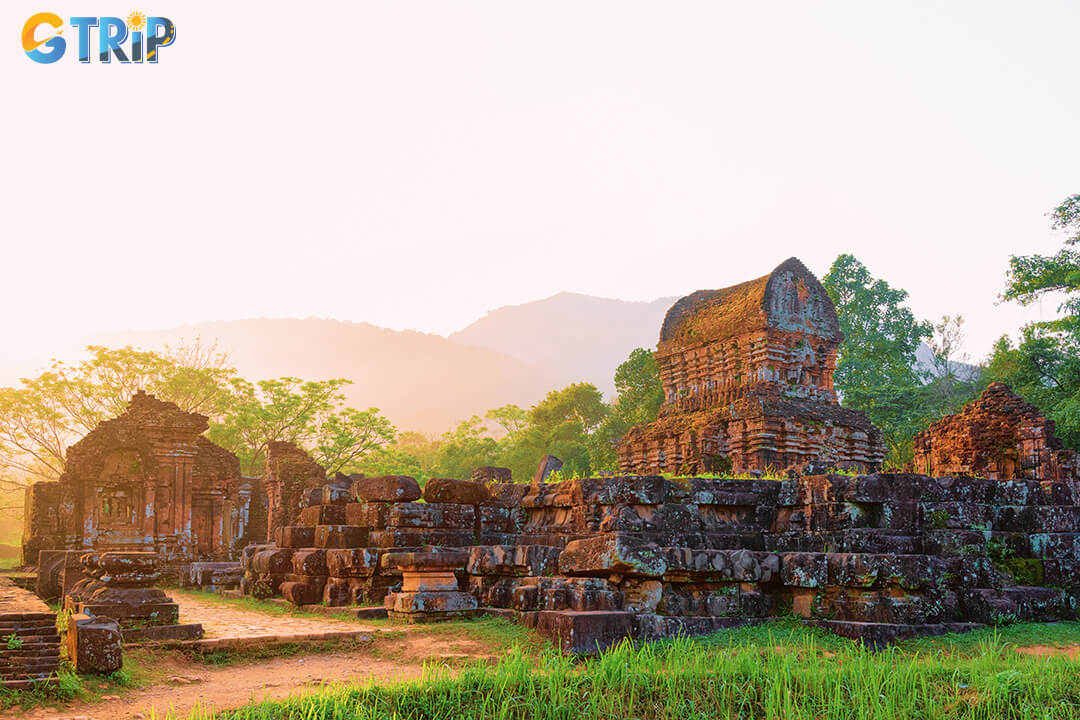
My Son Sanctuary, set in a mountain valley, offers a glimpse into the ancient Champa civilization and is easily accessible from Hoi An, Da Nang, and Hue
Opening hours and entrance fee of the relic
- Opening hours: 6:00 AM - 5:00 PM daily.
- Entrance fee: 150,000 VND (~$6) for foreign adults/children over 15
- Service fee: 30,000 VND (~$2) for internal tram transfers.
- Audio guide: Available via the "Di tich Thanh dia My Son" app for 70,000 VND (~$3), valid for 6 hours, headset rental: 50,000 VND (~2$)
Best time to visit My Son Sanctuary
To make the most of your excursion, understanding the local weather patterns is essential. My Son features two distinct seasons: the dry season (February to August) and the wet season (September to January). The dry season is ideal for photography, though temperatures can rise significantly by noon. Visiting the relic in the early mornings are perfect for comfortable exploration. Conversely, the rainy season brings cooler weather but also the risk of heavy rainfall and occasional flooding between October and December. Always check the local forecast before heading out to ensure the site is accessible and to pack appropriate gear, such as sun protection for sunny days or waterproof attire for the wet months.
- Peak season: February to August (Dry, sunny, and ideal for outdoor trekking).
- Off-peak season: September to January (Cooler, but higher chance of rain and occasional flooding).
- Daily timing: Early morning (before 9:00 AM) or late afternoon to enjoy cooler temperatures and avoid the midday sun.
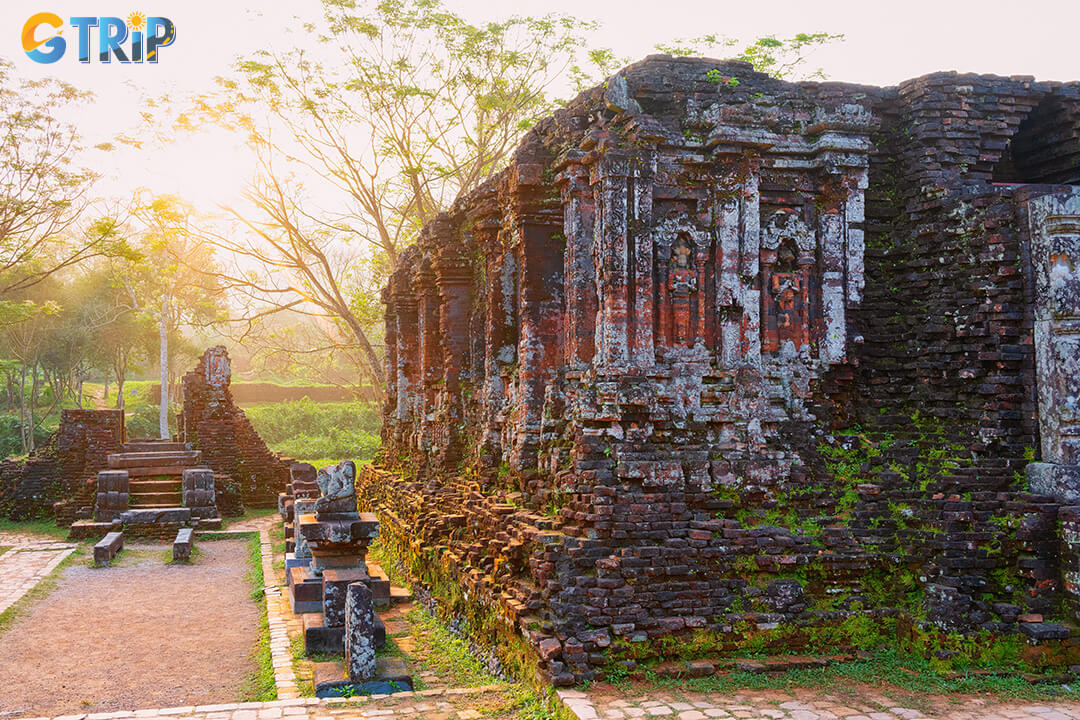
The best time to visit My Son is during the dry season (February-August), with early mornings or late afternoons ideal for cooler weather and comfortable exploration
What makes My Son Sanctuary unique?
My Son Sanctuary is not just another ancient ruin. What sets it apart is the depth of its history, the unanswered construction secrets, and the contrast between sacred architecture and wartime damage. Set in a quiet jungle valley, the site feels both powerful and reflective, especially when combined with traces of Champa culture that remain today.
- Champa’s most sacred center: The political and religious heart of the Champa Kingdom for nearly 900 years, often compared to Angkor Wat in scale and importance
- Unsolved construction technique: Brick towers built without visible mortar, with a binding method that still puzzles researchers today
- Seamless brick architecture: Millions of red bricks were precisely cut and fitted together so tightly that no joints or adhesive layers are visible
- War-scarred heritage: Ruins bear clear damage from the Vietnam War, including the collapse of key structures like tower A1
- Raw natural setting: Located in a 1,000-hectare valley, surrounded by forest, streams, and mountains
- Living Cham culture: Traditional music and dance performances help bring the ancient civilization back to life
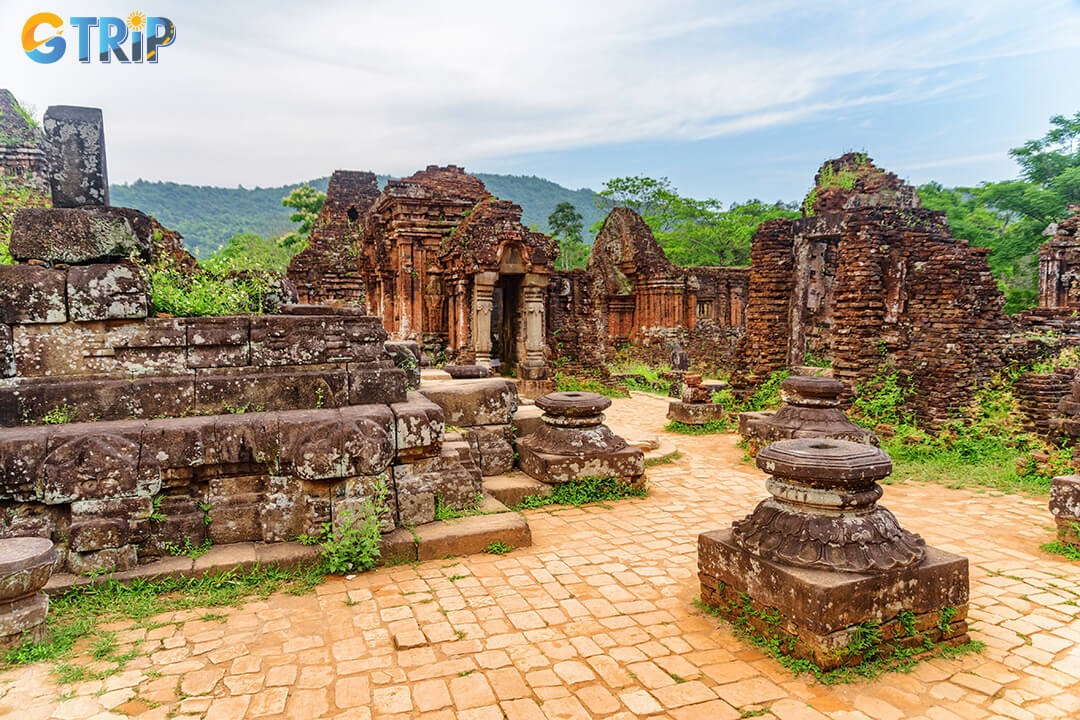
My Son Sanctuary stands out for its rich Champa heritage, mysterious construction techniques, and unique blend of ancient ruins set within a serene natural landscape
The history of My Son Sanctuary
The history of My Son Sanctuary is a fascinating yet tragic epic, stretching from the golden age of the Champa Kingdom to its current status as a World Heritage Site.
| Period | Key historical events |
|---|---|
| 4th - 13th century (The Golden Age) | The first temple was built in the 4th century by King Bhadravarman I to worship Shiva. The location was sacred: nestled at the foot of a "Holy Mountain" and along a "Holy River" (now the Thu Bon River). Surrounded by mountains, it also served as a safe haven for Cham kings. Although the first temple burned down in the 6th century, subsequent dynasties built dozens of majestic red brick and sandstone towers here. |
| After the 13th century (The Forgotten Era) | A turning point came in 1306 with the historic marriage between Princess Huyen Tran (Dai Viet) and King Che Man (Champa). The My Son area was given as a wedding gift. Over time, the Cham people left this religious center, and the temples were swallowed by the thick jungle. |
| Late 19th century (Rediscovery) | French explorers accidentally rediscovered the site in 1885. By 1895, French archaeologists began studying it, recording 71 structures and grouping them into letters of the alphabet (A to N). Many masterpiece sculptures were moved to the Cham Museum in Da Nang for protection. |
| The 1970s (War and Destruction) | Suspecting Viet Cong forces were hiding in the valley, the US military heavily bombed the area. Many temples, including the architectural masterpiece Tower A1, were severely damaged or destroyed. |
| 1999 - present (World Heritage) | My Son Sanctuary was officially recognized as a UNESCO World Heritage Site in 1999. Between 2020 and 2022, with the help of Indian experts, Groups A, H, and K were successfully restored, bringing back some of the site's ancient glory. |
Unique and mysterious Cham architecture
The architecture at My Son is deeply influenced by Hinduism. One standout feature is that almost all temples face East, the direction of the rising sun and the home of the gods.
A typical Cham temple is divided into three parts representing the universe: the base (mortal world), the body (spirit world), and the top (the connection between heaven and earth). Each tower honors a different king, dynasty, or deity, piecing together the history of Champa. The site is divided into several main groups:
- Group A: The first area you’ll see. It offers a great panoramic view of the sanctuary and is currently undergoing active restoration.
- Group B: Located on the western hill, featuring one main tower and three side towers.
- Group C & D: Situated on the southern hill. This is the most unique and best-preserved area, filled with detailed carvings, reliefs, and ancient Sanskrit inscriptions.
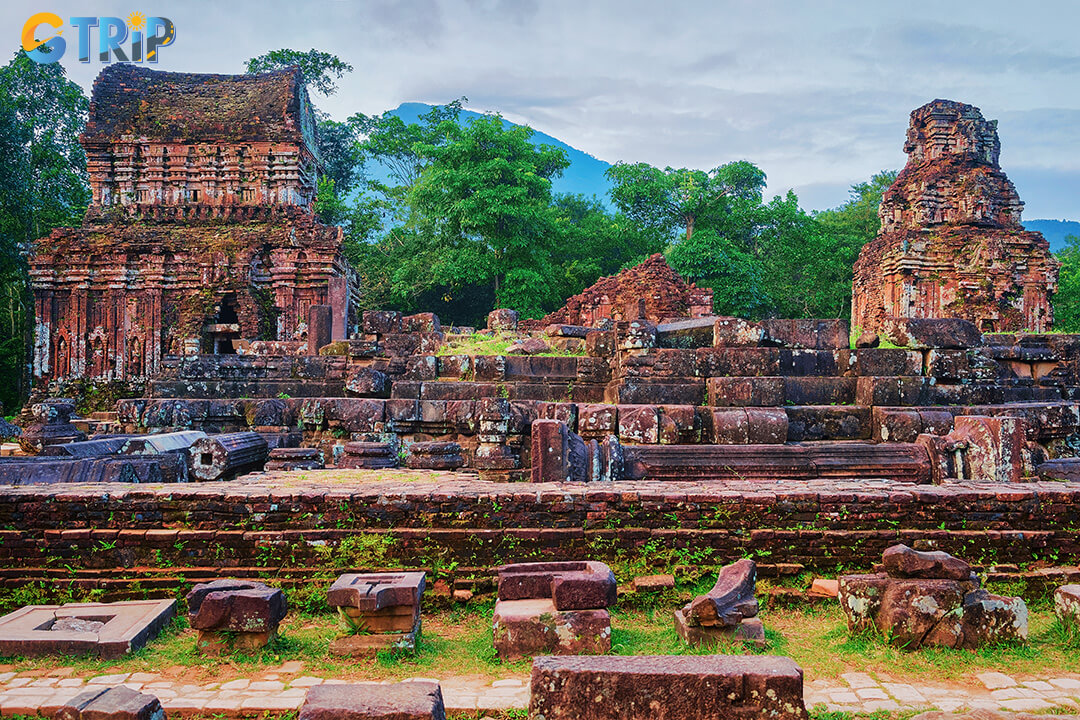
My Son’s architecture reflects Hindu influence, with east-facing temples and distinct groups showcasing the spiritual and historical depth of the Champa civilization
Things to do at My Son Sanctuary
To make the most of your visit, here are the top experiences you shouldn’t miss at My Son Sanctuary:
1. Visit the My Son Museum
Just a short walk from the main gate, the My Son Museum is the perfect first stop. It features two exhibition areas showcasing archaeological artifacts and explaining the history, building techniques, and decorative motifs of the ancient Cham people. Learning a bit here will make your walk through the ruins much more meaningful. Don’t forget to snap a photo with the giant "My Son" sign before heading in!
2. Admire the centuries-old temples
The highlight of your trip will be exploring structures dating back to the 8th-13th centuries. Keep an eye out for:
- Kalan Tower: The 24-meter-high main tower dedicated to Shiva, surrounded by six smaller towers.
- Gopura Tower: The gateway tower sitting in front of Kalan. Its connecting East-West doors create a perfect frame for sunset photos.
- Mandapa Tower: A unique longhouse-style building originally used to welcome pilgrims.
- The Ancient Royal Road: An 8-meter-wide path with buried brick walls, once a sacred walkway reserved only for royals and high priests.
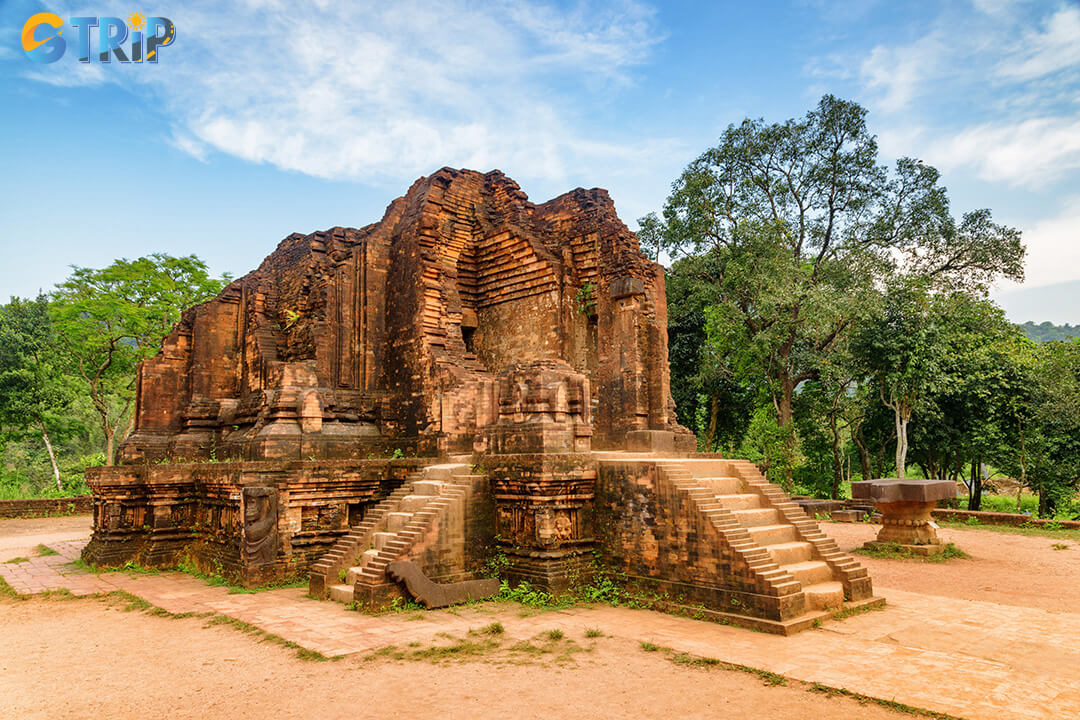
Explore centuries-old structures like Kalan, Gopura, and Mandapa towers, along with the ancient royal road, dating from the 8th to 13th centuries
3. Watch a traditional Cham Art Show
Near Groups B, C, and D, the public stage brings the spirit of ancient Champa to life. You’ll be captivated by the graceful Apsara dance (the "Soul of Stone"), the upbeat sounds of the Saranai trumpet, and the powerful beats of the Paranung drum. Showtimes (approx. 15 minutes): 9:15 AM, 10:00 AM, 10:45 AM, 2:00 PM, 2:15 PM, and 3:30 PM daily. Stick around after the show to take photos with the performers.
4. Experience the Kate Festival (July in the Cham Calendar)
If you visit during this time, you can join the traditional Kate Festival. It’s a special time when the Cham people honor their ancestors and pray for fertility. You’ll witness authentic rituals like water processions and palanquin parades, accompanied by live traditional music. It’s also a rare opportunity to experience the rich spiritual and cultural heritage of the Cham community.
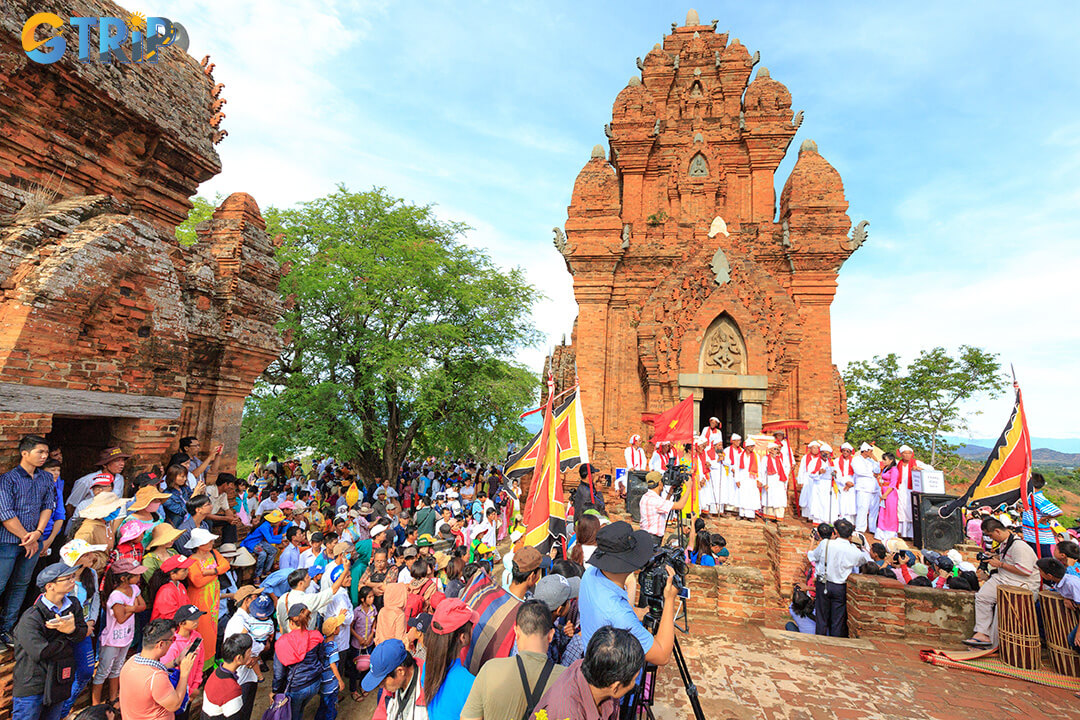
Visit during the Kate Festival to experience vibrant Cham rituals, traditional music, and rich cultural heritage
5. Rent traditional costumes for photos
With its red brick towers and lush green jungle background, My Son is a photographer's dream. To make your photos stand out, you can rent colorful, traditional Cham costumes right at the site. Posing next to ancient stone carvings in these outfits guarantees you some unforgettable pictures.
6. Taste local Quang Nam specialties
A trip to My Son isn't complete without trying the local food:
- Be thui Cau Mong: Wood-fired young veal with crispy skin and tender meat, wrapped in rice paper with fresh herbs and dipped in a savory garlic-chili sauce. It’s a must-try specialty that perfectly showcases the bold flavors of Quang Nam cuisine.
- Mi Quang Phu Chiem: Chewy rice noodles in a rich broth, topped with braised pork, shrimp, and fresh greens. This iconic dish offers a perfect balance of textures and flavors in every bite.
- Local rice cakes: Try banh dap (smashed rice crackers), banh beo (steamed rice cakes), or banh xeo (crispy pancakes) for a true taste of Quang Nam. These simple yet flavorful dishes highlight the region’s traditional culinary charm.
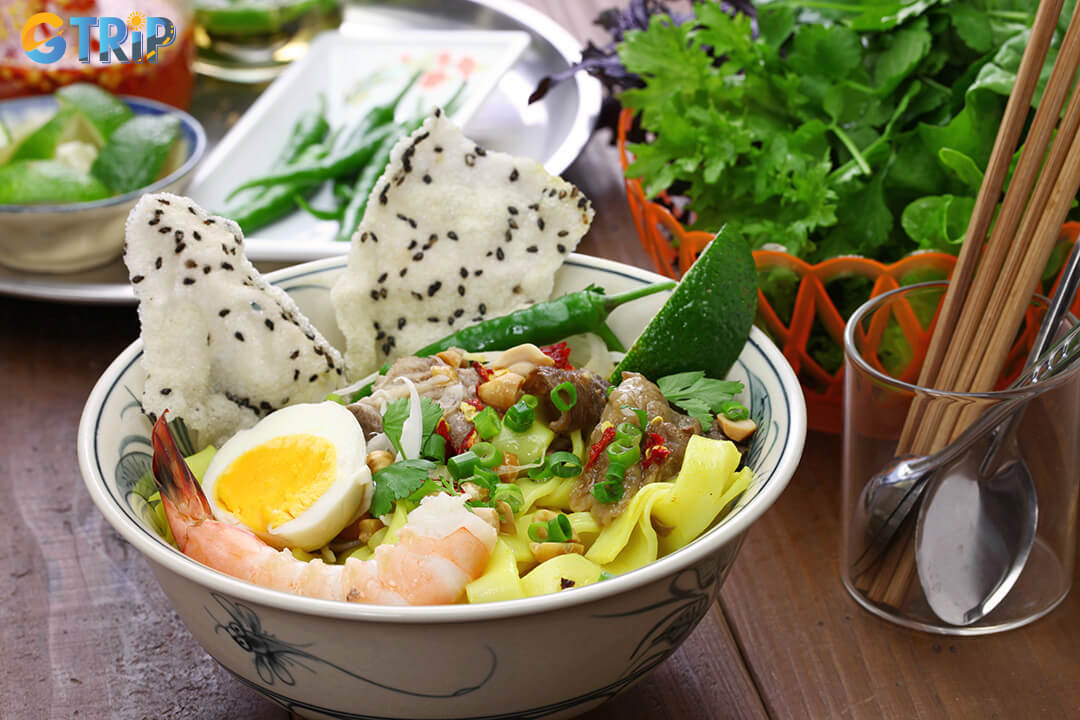
Savor Quang Nam’s signature flavors with specialties like Mi Quang and traditional rice cakes
How to get to My Son Sanctuary?
My Son Sanctuary is located inland from both Da Nang and Hoi An, making it accessible within a half-day trip. Depending on where you start, the journey usually takes between 1 and 1.5 hours and passes through quiet countryside roads. Below are the most common routes and transport options to help you plan your trip more easily.
From Da Nang International Airport
The sanctuary is located approximately 45-50 km from the airport. Traveling by road typically takes about 60 to 80 minutes depending on traffic conditions. The most direct route is via National Highway 1A, heading south toward Nam Phuoc Town before turning toward the sanctuary.
- Distance: ~45-50 km
- Travel time: 60-80 minutes
- Routes: National Highway 1A to DT609
- Optimal option: Private car or pre-booked taxi for convenience after your flight.
From Da Nang City center
Travelers starting from the city center have several transit options to reach the site. The journey involves heading through rural landscapes toward the former Duy Xuyen District, offering a scenic look at the local countryside.
- Distance: ~40-45 km
- Travel time: 60 minutes
- Routes: National Highway 1A to Vinh Dien, turning toward Tra Kieu
- Optimal option: Private car or shuttle service for comfort, or Route 06 bus for a budget-friendly alternative.
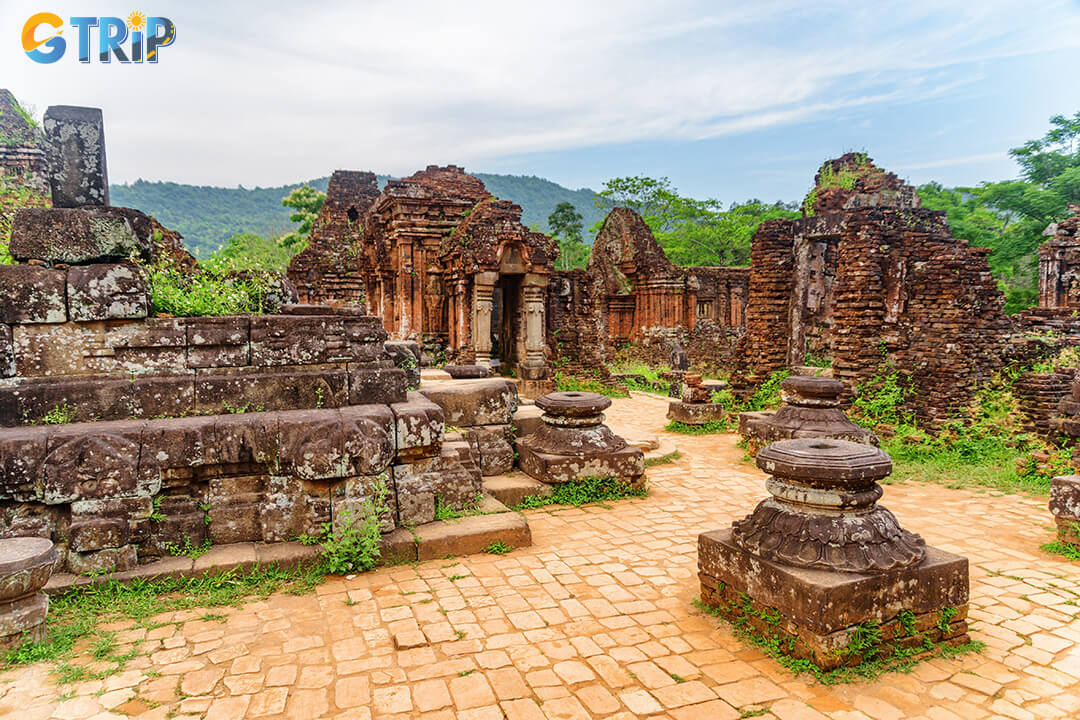
Reach the site via a scenic 60-minute journey from the city, with options ranging from private cars to budget-friendly buses
From Hoi An Ancient Town
Hoi An is the closest major tourist hub to the sanctuary. The route is relatively straightforward, passing through picturesque provincial roads. Many visitors combine this trip with a local tour to better navigate the area.
- Distance: ~40 km
- Travel time: 60 - 90 minutes
- Routes: DT608 or provincial road TL609
- Optimal option: Motorbike for freedom or a private minivan tour for a hassle-free experience.
Transportation options
You can choose from various transport modes depending on your budget and preference for flexibility. While public transport is available, private arrangements remain the most reliable way to explore this World Heritage site.
- Private car/Taxi: Most comfortable and flexible, ideal for families.
- Motorbike: Cost-effective and adventurous, best for experienced riders (rental: 100k-200k VND/day).
- Shuttle bus: Reliable, offered by many local hotels.
- Public bus (Route 06): Cheapest option (8.000-30.000 VND) running daily between Da Nang/Hoi An and My Son.
Accommodation when traveling to My Son Sanctuary
Since My Son Sanctuary is located in a rural valley, most travelers choose to stay in nearby towns like Hoi An, Tam Ky, or along the coastal areas. These locations offer a wider range of accommodation options, from resorts to homestays, while still being within easy driving distance for a day trip to the sanctuary.
- My Son Heritage Resort And Spa: (My Son Area, Duy Phu Commune, Duy Xuyen District, Quang Nam Province): Located closest to the sanctuary, this resort offers a quiet stay surrounded by nature, convenient for early visits to My Son
- Ann Retreat Resort & Spa: (47 Thoai Ngoc Hau, Cam Pho Ward, Hoi An, Quang Nam Province): A riverside resort in Hoi An, combining modern comfort with a relaxed atmosphere near the Old Town
- Muong Thanh Grand Quang Nam Hotel: (No. 351A Hung Vuong, An Xuan Ward, Tam Ky City, Quang Nam Province): A large, full-service hotel in Tam Ky, suitable for travelers looking for more facilities and city access
- An Bang Vera Homestay: (Tan Thanh Block, An Bang Beach, Cam An, Hoi An, Quang Nam): A cozy, budget-friendly stay near An Bang Beach, ideal if you prefer a beachside base
- Hoi An Golden Street Hotel: (Nguyen Huu Do, Dien Nam Commune, Dien Ban District, Quang Nam Province): A mid-range option between Da Nang and Hoi An, convenient for flexible travel between the coast and My Son
Nearby attractions to the My Son Sanctuary
Beyond the temple complex, there are a few nearby spots that add more depth to your visit. These places are either located within the valley or close enough to combine into the same trip, offering a mix of nature, viewpoints, and cultural experiences.
- Mhadravata Mountain (Cat’s Tooth Mountain): A sacred peak rising about 730 meters, believed by the Cham people to represent balance and harmony. It also creates a dramatic backdrop for the entire sanctuary. The mountain adds to the mystical atmosphere surrounding the site.
- Thu Bon River: Flowing near the valley, this river once played an important role in connecting My Son to ancient Champa trade routes. It helped transport goods and supported the region’s economic and cultural exchange.
- Tra Kieu Ancient Citadel: Located on the way to My Son, this former Champa capital offers additional historical context to the site. Visiting here helps you better understand the legacy of the ancient Champa Kingdom.
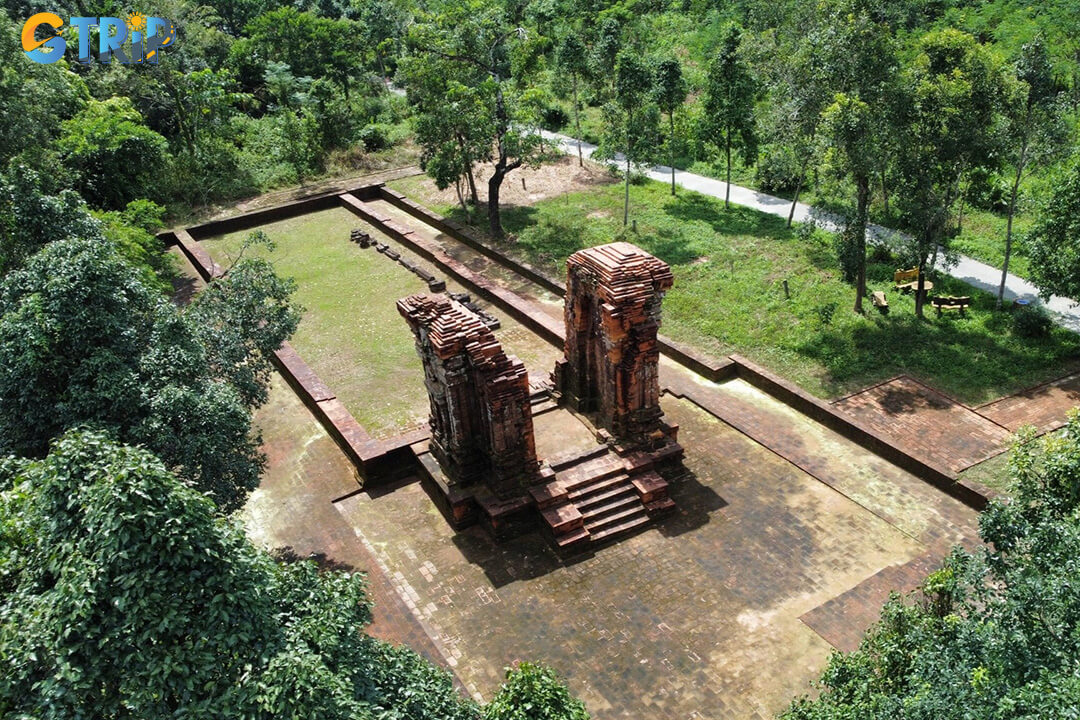
Enhance your visit with nearby landmarks like Mhadravata Mountain, Thu Bon River, and Tra Kieu Citadel, offering added natural beauty and historical context
Practical tips for visitors when visiting the My Son Sanctuary
To ensure your visit to My Son Sanctuary is as meaningful and seamless as possible, please keep the following practical tips in mind. These essential notes will help you prepare your itinerary, choose appropriate attire, and navigate the cultural requirements of this World Heritage Site:
- Dress code: Maintain respect by wearing clothing that covers your shoulders, chest, and knees. Avoid see-through fabrics. If needed, you can purchase appropriate attire at the sanctuary shops.
- Weather preparation: Bring sunscreen, hats, and sunglasses during the dry season (Feb-Aug). In the rainy season (Sep-Jan), carry rain gear and wear waterproof footwear, check forecasts as flooding may occur.
- Guided exploration: Hire a local guide or use the official mobile app’s audio guide (available in multiple languages) to better understand the site’s history.
- Time management: Allocate at least half a day for your visit. Note that the site closes before dark, and sunset visits are restricted.
- Rules & Etiquette: Worship and incense burning are not permitted. Use the tram service from the ticket gate to access the complex.
- Additional info: Vietnamese citizens should bring their ID for ticket discounts.
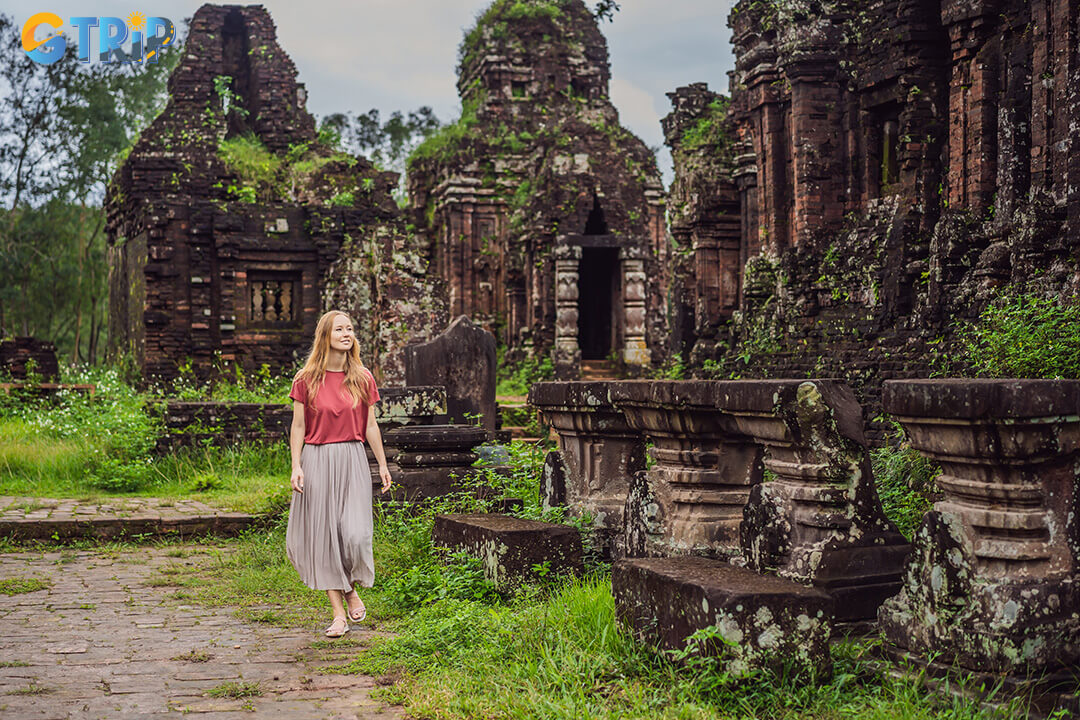
Plan with proper attire, weather prep, and a guided visit to fully enjoy My Son Sanctuary respectfully and comfortably
My Son Sanctuary is more than a collection of ancient ruins. It’s a place where history, culture, and landscape come together in a quiet, lasting way. Walking through the weathered brick towers, you get a real sense of how the Champa Kingdom once lived, worshipped, and connected with nature. Despite centuries of time and the impacts of war, the site still holds its presence, making it one of the most meaningful cultural experiences in Central Vietnam. If you’re planning to explore the region, GTrip can help you make the most of your journey with curated Da Nang tours.
Custom Your Journey

Other Attractions
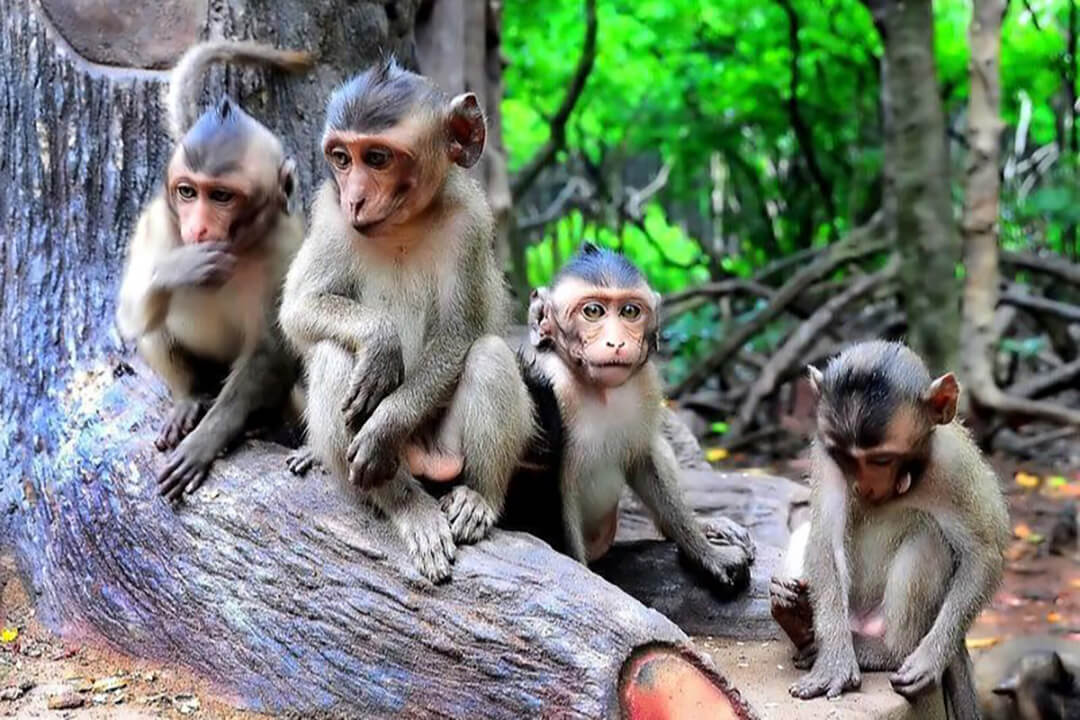
Can Gio Monkey Island in Ho Chi Minh City: Tickets, Things to Do & Travel Guide
Can Gio Monkey Island
Can Gio Monkey Island in Ho Chi Minh City offers a refreshing escape from the city’s buzzing motorbike chaos. Just a short distance from the center, Can Gio welcomes you with lush mangrove forests, winding waterways, and a fascinating history. Here, you can meet playful long-tailed macaques, drift through tranquil channels, and explore remnants of a wartime guerrilla base.
Can Gio Monkey Island in Ho Chi Minh City: Tickets, Things to Do & Travel Guide
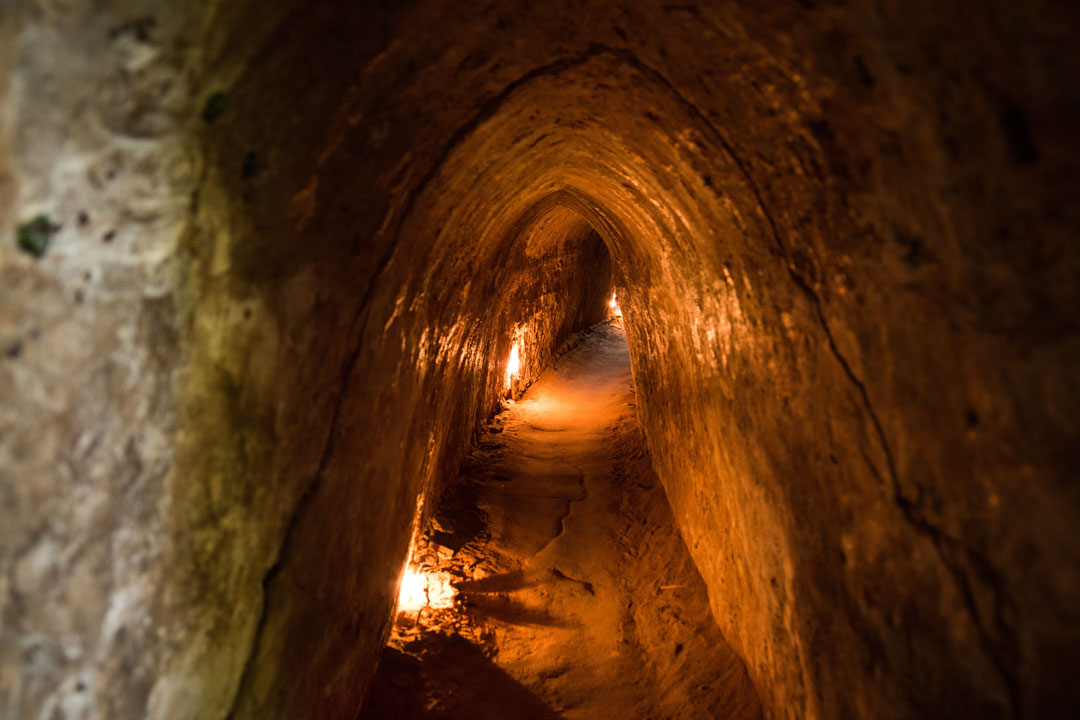
Cu Chi Tunnels: History, Architecture, Things To Do & Travel Guide
Cu Chi Tunnels
The Cu Chi Tunnels, located at TL15, Phu Hiep, Cu Chi District, Ho Chi Minh City, are a vast underground network of strategic passages, shelters, supply routes, and defensive traps.
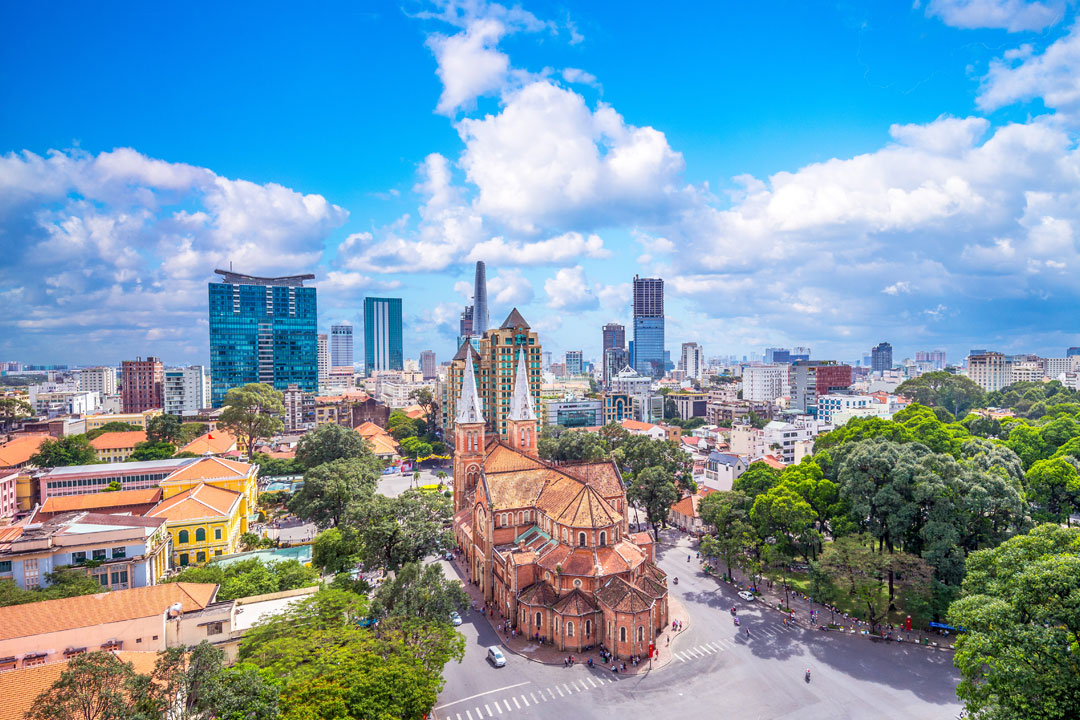
Ho Chi Minh City
Ho Chi Minh City, known as the "Pearl of the Far East," attracts both domestic and foreign tourists with its unique and diverse destinations.
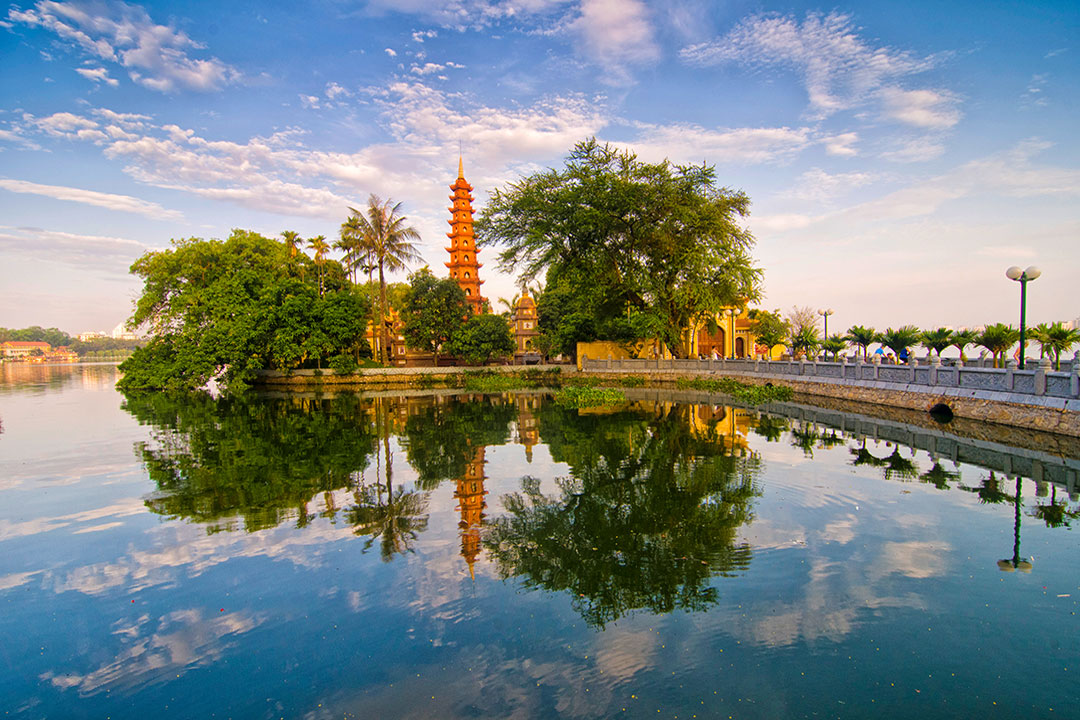
Tran Quoc Pagoda: History, Architecture, Significance & Travel Guide
Tran Quoc Pagoda
Nestled on the tranquil shores of West Lake, Tran Quoc Pagoda is the oldest Buddhist temple in Hanoi, with a history spanning over 1,500 years. Built in the 6th century under Emperor Ly Nam De, this sacred site reflects Vietnam’s Buddhist evolution while preserving its spiritual and architectural grandeur.