

Tuesday, October 13, 2026
Just a short distance from Hoi An, Phuoc Kieu Bronze Casting Village is one of the oldest traditional craft villages in Central Vietnam, with more than 400 years of history. The village is known for its long-standing bronze casting tradition, where artisans still create gongs, temple bells, worship objects, and decorative items using techniques passed down through generations. In this guide, GTrip highlights what to see, things to do, and how to get there, helping travelers easily plan a cultural stop between Hoi An, Da Nang, and My Son Sanctuary.
Table of Content
- Overview of Phuoc Kieu bronze Casting Village
- What makes Phuoc Kieu Bronze Casting Village unique?
- History of Phuoc Kieu Bronze Casting Village
- Top 6 things to do at Phuoc Kieu Bronze Casting Village
- 1. Watch the traditional bronze casting process in Phuoc Kieu village workshops
- 2. Listen to bronze gongs and traditional instruments made by local artisans
- 3. Explore workshops and admire handcrafted bronze products on display
- 4. Experience the peaceful atmosphere of a traditional craft village
- 5. Buy authentic Phuoc Kieu bronze souvenirs directly from artisans
- 6. Try local specialties
- How to get to Phuoc Kieu bronze casting village?
- Nearby attractions to the Phuoc Kieu Bronze Casting Village
- Practical tips for visitors
Overview of Phuoc Kieu bronze Casting Village
As one of the most famous traditional craft villages in Hoi An, Phuoc Kieu Bronze Casting Village stands out for its centuries-old bronze casting heritage and convenient location between Hoi An and Da Nang. Before planning your visit, it’s helpful to understand where the village is located, the opening hours, entrance fee, and the best time to experience its workshops and cultural atmosphere.
Where is Phuoc Kieu Bronze Casting Village?
Location: Dien Ban Ward (formerly Dien Phuong, Dien Ban Town, Hoi An, Quang Nam), Da Nang City
Phuoc Kieu Bronze Casting Village is located along National Highway 1A, between Hoi An and Da Nang, making it easy to visit on the way between the two destinations. The village lies about 9 km west of Hoi An Ancient Town and roughly 25 km south of Da Nang City center. Thanks to its convenient position near the Thu Bon River trade route, it has long been an important craft hub in central Vietnam. Today, travelers often combine the village with nearby attractions or include it in a half-day cultural trip from Hoi An or Da Nang.
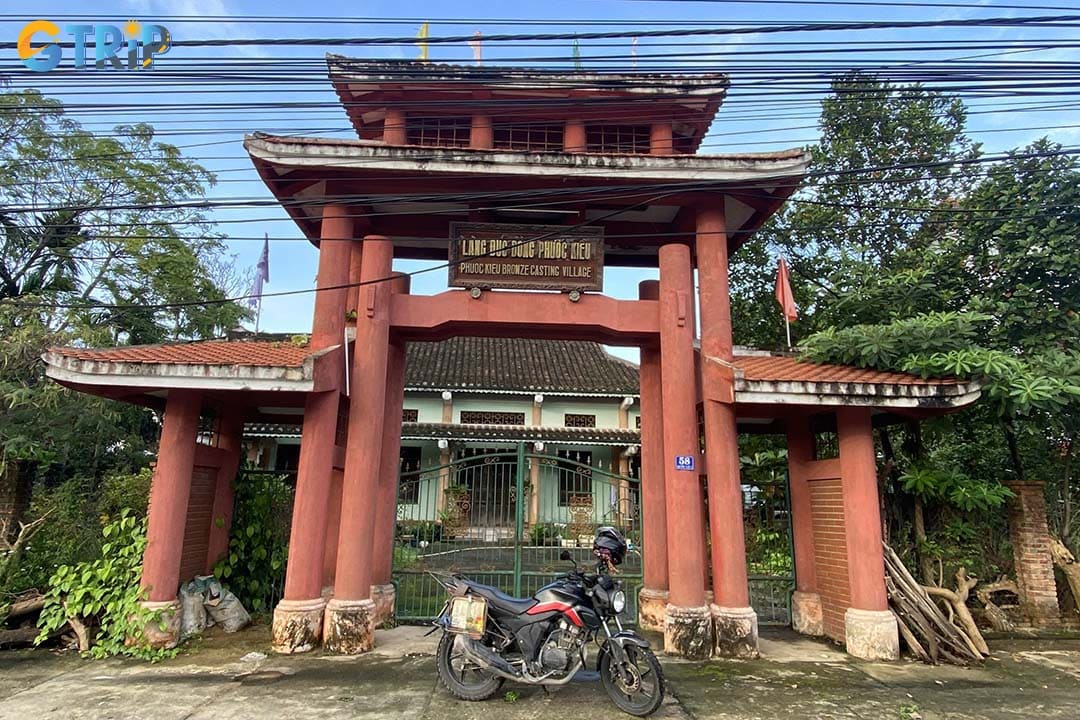
Phuoc Kieu Bronze Casting Village stands out for its centuries-old bronze casting heritage and convenient location
Opening hours & entrance fee
- Opening hours: 7:00 AM - 9:00 PM
- Entrance fee: Free
Visitors can freely explore local workshops, watch artisans casting bronze, and browse finished products without paying an entrance fee. Some households may charge a small additional cost for hands-on experiences or guided demonstrations. Shops selling bronze gongs, bells, and souvenirs operate throughout the day, with the liveliest atmosphere typically in the morning and late afternoon.
Best time to visit Phuoc Kieu Bronze Casting Village
Ideal time: February to August
The best time to visit is during the dry season from February to August, when the weather is sunny and suitable for walking around the village and observing outdoor casting activities. Clear skies also make it easier to combine the visit with nearby attractions between Hoi An and Da Nang. Morning and late afternoon are particularly ideal, as workshops are more active and temperatures are more comfortable.
What makes Phuoc Kieu Bronze Casting Village unique?
With over 400 years of history, Phuoc Kieu Bronze Casting Village is one of the oldest traditional craft villages near Hoi An, known for preserving royal-era bronze casting techniques. Originally producing weapons and household items for the Nguyen lords, the village later became famous for ceremonial instruments and daily-use objects. Despite historical changes, the craft has endured and continues to reflect the cultural identity of central Vietnam.
- Ceremonial items: bells, gongs, drums, flutes, and ritual ornaments
- Worship objects: incense burners, candlesticks, altars, statues
- Household items: pots, bowls, trays, and decorative souvenirs


History of Phuoc Kieu Bronze Casting Village
With a history spanning more than 400 years, Phuoc Kieu Bronze Casting Village developed alongside major political and cultural changes in central Vietnam. It evolves from a royal workshop into a well-known traditional craft destination.
- Early 17th century: The village was founded by Duong Tien Hien, who migrated from Thanh Hoa to Quang Nam and introduced bronze casting techniques. Thanks to its location near the Nguyen lords’ citadel and the Thu Bon River trade route, the village quickly became an important bronze production center. Early products mainly included weapons and household items used in the Nguyen court.
- Late 18th century: During the Tay Son period, the village was organized to forge weapons for military uprisings, expanding its role in regional defense. Around this time, a neighboring bronze-working settlement known as Dong Kieu also emerged.
- 1832: King Minh Mang officially merged Phuoc Kieu and Dong Kieu into one administrative unit under the common name Phuoc Kieu, marking the consolidation of the bronze casting tradition in the area.
- 1980s-1990s: Like many traditional craft villages in Quang Nam, production declined due to competition from industrial factories, causing many households to stop casting.
- Present day: Through the efforts of skilled artisans and support from the Vietnamese government and UNESCO, the craft has been preserved. The village now has around 20 households and about 50 artisans, specializing in worship objects and bronze gongs, and remains one of the most culturally significant craft villages in central Vietnam.
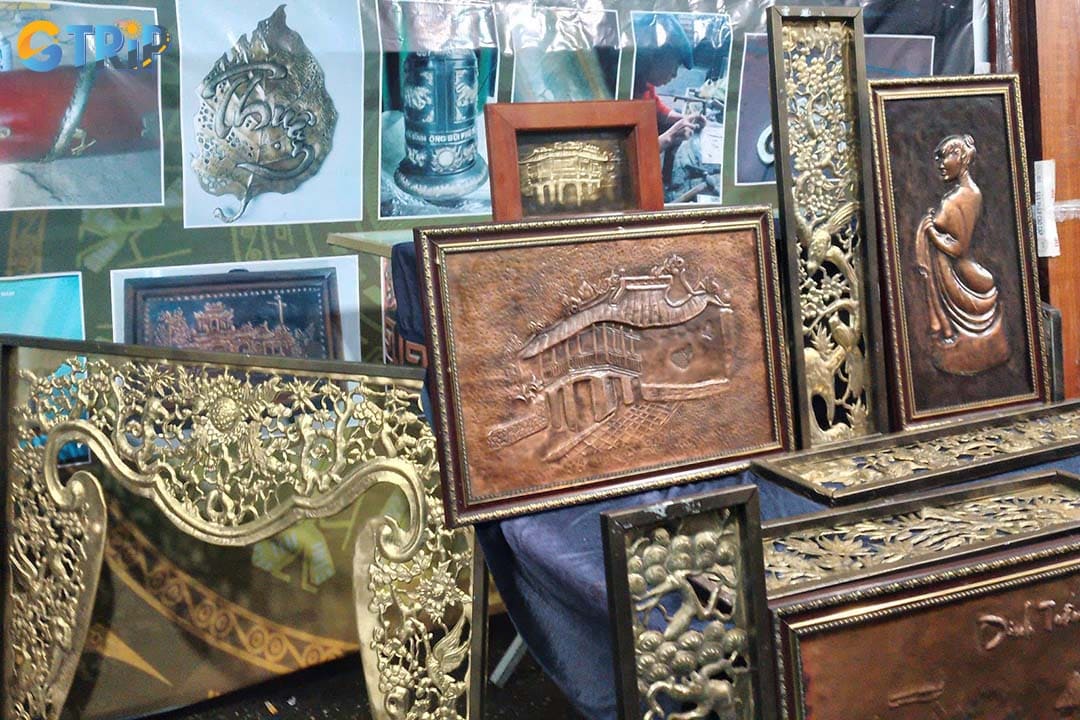
Phuoc Kieu Bronze Casting Village has a more-than-400-year history
Top 6 things to do at Phuoc Kieu Bronze Casting Village
Visiting Phuoc Kieu bronze casting village offers a chance to experience traditional craftsmanship, peaceful rural scenery, and local cuisine in one place. Here are the best things to do when visiting this historic craft village.
1. Watch the traditional bronze casting process in Phuoc Kieu village workshops
Watching the bronze casting process is the highlight of visiting Phuoc Kieu Bronze Casting Village. Visitors can step inside family-run workshops to observe artisans shaping clay molds, melting bronze at extremely high temperatures, and carefully pouring liquid metal into prepared forms. After cooling, craftsmen refine each piece using hammering, polishing, and sound testing. The glowing furnaces, rhythmic metal sounds, and skilled coordination between workers provide a vivid look into a craft that has been preserved for more than 400 years.
2. Listen to bronze gongs and traditional instruments made by local artisans
Phuoc Kieu is especially famous for producing bronze gongs used in Central Vietnam’s traditional festivals and rituals. Artisans carefully adjust thickness and shape to create specific tones, then test each piece before selling. Visitors may hear a short demonstration where craftsmen strike multiple gongs to showcase different sounds. The deep, resonant tones echo throughout the village and offer a memorable cultural experience connected to the musical traditions of the Central Highlands and Quang Nam region.
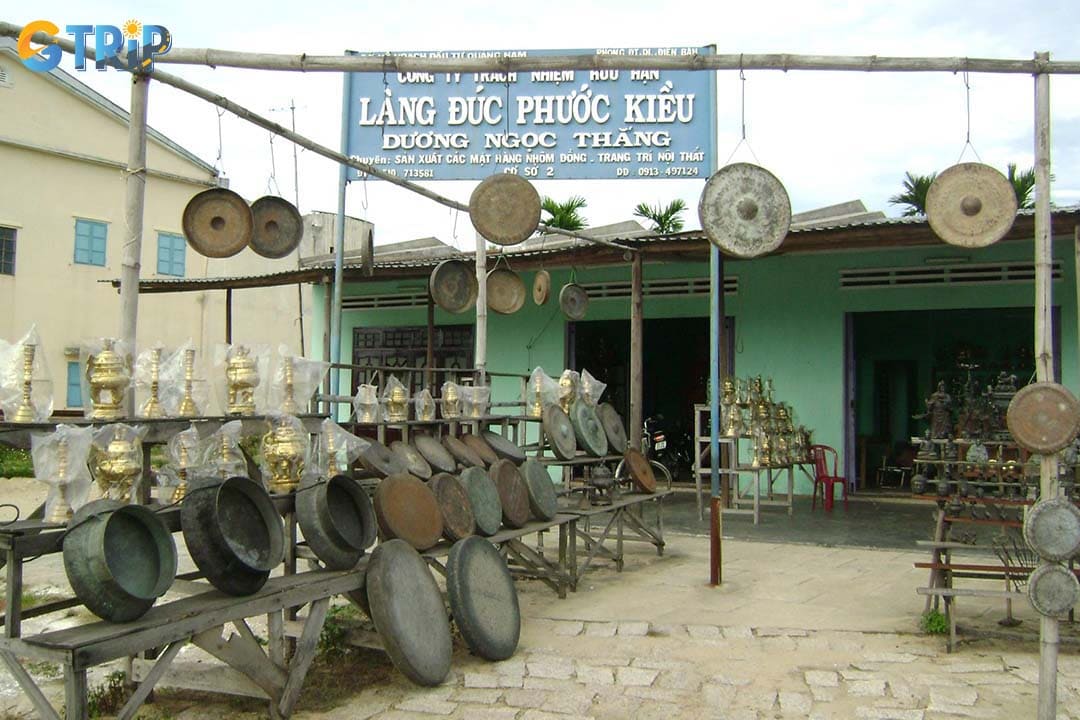
Phuoc Kieu is especially famous for producing bronze gongs used in Central Vietnam’s traditional festivals and rituals
3. Explore workshops and admire handcrafted bronze products on display
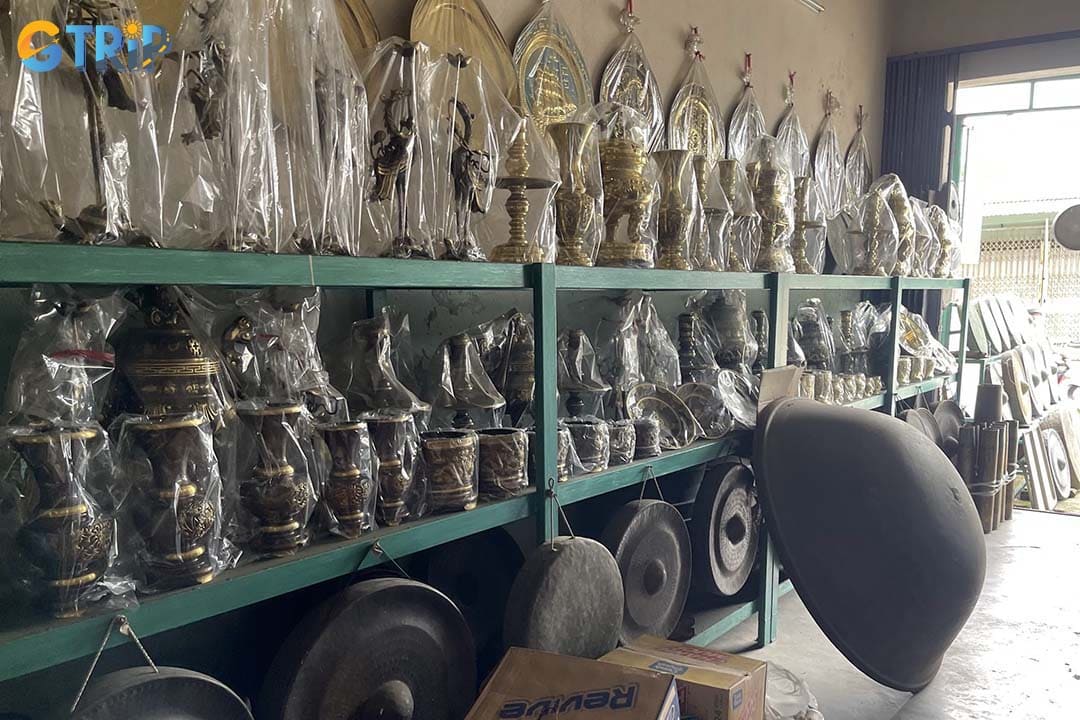
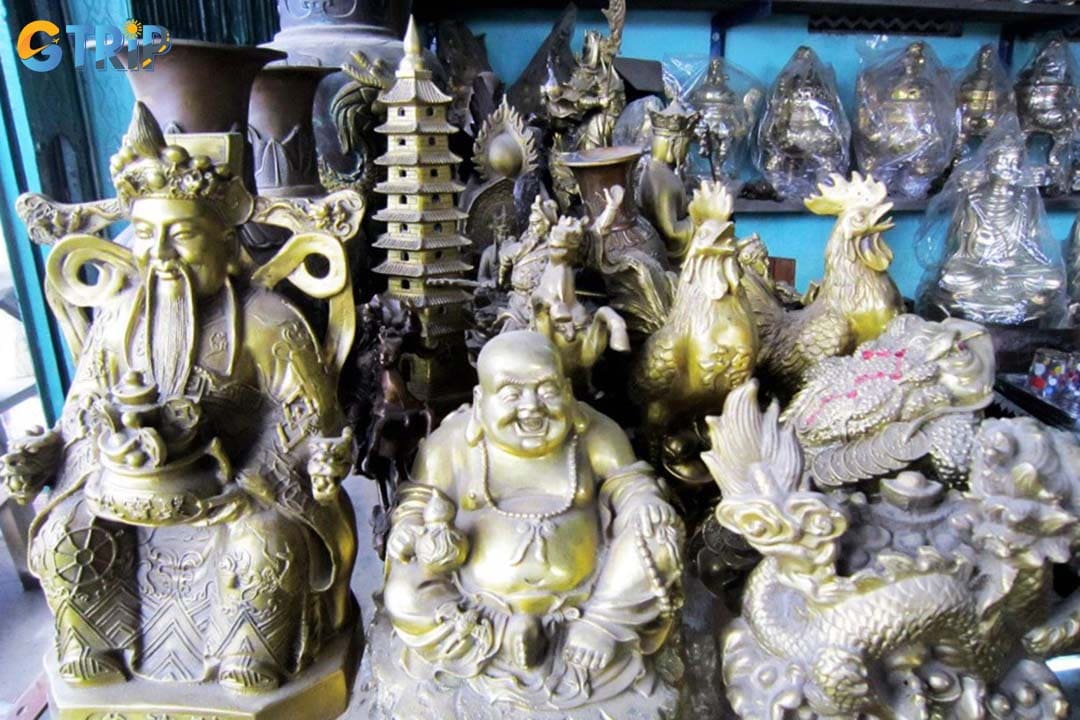
As you walk through the village, many workshops display finished bronze products in small showrooms. Visitors can admire large temple bells, ceremonial drums, statues, incense burners, candlesticks, and decorative items. Each product features intricate details and traditional motifs such as dragons, phoenixes, and religious symbols. Exploring these spaces helps visitors better understand the craftsmanship and appreciate the wide range of items produced by local artisans.
4. Experience the peaceful atmosphere of a traditional craft village
Beyond the workshops, Phuoc Kieu offers a calm rural setting that reflects traditional Vietnamese village life. The atmosphere is quiet and relaxed, with small houses, local families, and open workspaces scattered along the road. Visitors can stroll around, observe daily activities, and enjoy the slower pace compared to busy tourist areas. This peaceful environment makes the village an ideal cultural stop when traveling between Hoi An, Da Nang, and My Son Sanctuary.
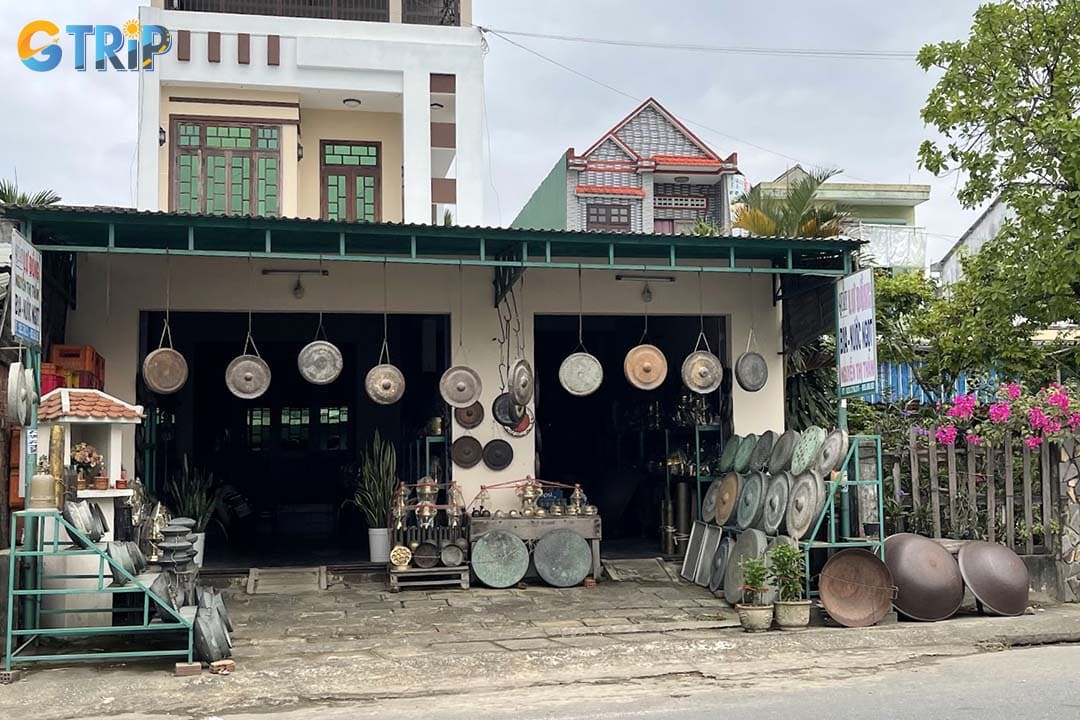
Phuoc Kieu Bronze Casting Village offers a calm rural setting that reflects traditional Vietnamese village life
5. Buy authentic Phuoc Kieu bronze souvenirs directly from artisans
Shopping in Phuoc Kieu is a great way to bring home meaningful handcrafted souvenirs. Shops and workshops sell a variety of bronze items, including miniature gongs, bells, statues, feng shui objects, and worship accessories. Smaller decorative pieces are easy to carry, while larger ceremonial items are also available for shipping. Purchasing directly from artisans supports local families and helps preserve the traditional bronze casting craft.
6. Try local specialties
After exploring the village, visitors can enjoy regional dishes from Dien Ban and Quang Nam, known for their bold flavors and local ingredients.
- Cau Mong grilled veal: tender veal served with fresh herbs and fermented fish sauce
- Quang noodles (Mi Quang): turmeric noodles with pork, chicken, herbs, and sesame crackers
- Tam Ky chicken rice: shredded free-range chicken with turmeric rice and pickles
- Pork rice paper rolls: sliced pork belly wrapped with herbs and dipped in fish sauce
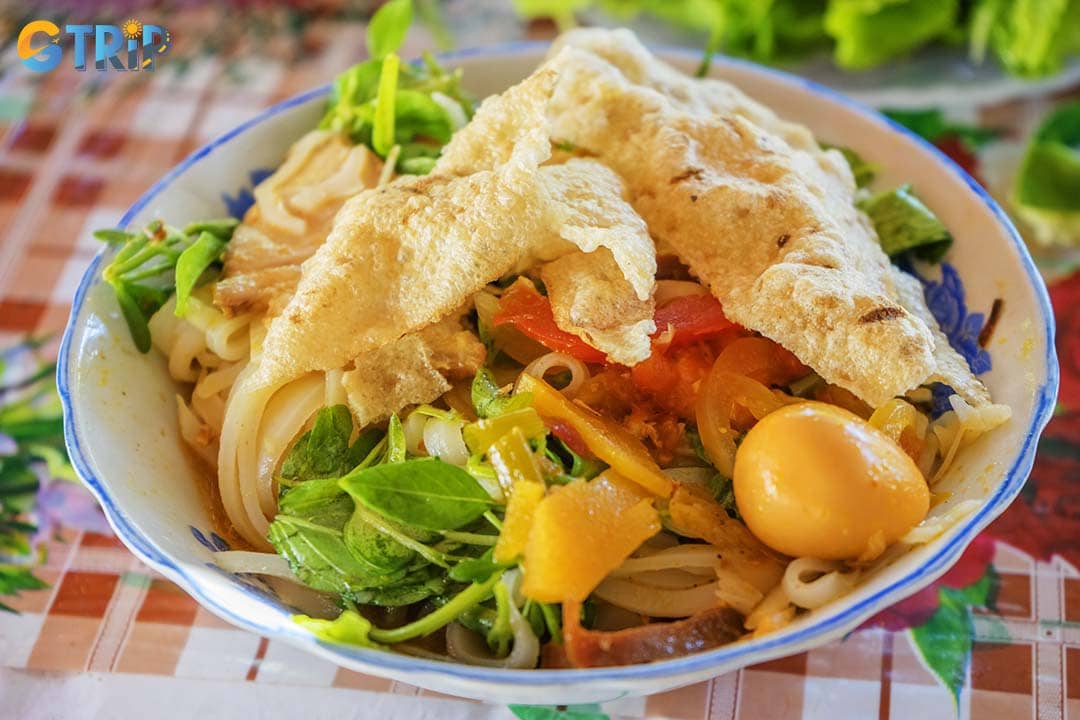
After exploring the Phuoc Kieu Bronze Casting Village, you can try local specialties such as Quang noodles
How to get to Phuoc Kieu bronze casting village?
Phuoc Kieu bronze casting village is conveniently located between Da Nang and Hoi An, along the route to My Son Sanctuary, making it easy to include in a half-day cultural trip. Below are the most common routes from Da Nang International Airport, Da Nang City center, and Hoi An Ancient Town, along with recommended transportation options.
From Da Nang International Airport
From Da Nang International Airport, travelers can reach Phuoc Kieu Bronze Casting Village by heading south toward Hoi An. The village sits along the route connecting Da Nang, Hoi An, and My Son Sanctuary, making it a convenient cultural stop on the way. Private transport is the most practical choice, as public buses do not directly serve the village.
- Distance: ~35 km
- Travel time: 45-60 minutes
- Routes: Airport → Vo Nguyen Giap / National Highway 1A → Dien Ban → Phuoc Kieu Village
- Optimal option: Private car or taxi for direct and comfortable travel
From Da Nang City Center
From Da Nang City center, the easiest way is to travel south toward Hoi An via National Highway 1A. The village is located before reaching Hoi An and near the route leading to My Son Sanctuary, making it easy to combine with nearby craft villages and cultural sites.
- Distance: ~25 km
- Travel time: 35-45 minutes
- Routes: Da Nang center → National Highway 1A → Dien Ban Ward → Phuoc Kieu Village
- Optimal option: Taxi, private car, or motorbike for flexibility
From Hoi An Ancient Town
Phuoc Kieu Bronze Casting Village lies about 9-10 km west of Hoi An Ancient Town and is easily accessible by road toward My Son Sanctuary. Visitors can follow Hung Vuong Street, turn onto Pham Phan Street, pass Thanh Ha Pottery Village, and continue straight to the village near Dien Phuong Post Office.
- Distance: ~9.5 km
- Travel time: 15-20 minutes by car, slightly longer by bicycle or motorbike
- Routes: Hoi An → Hung Vuong → Pham Phan → Nguyen Du → Dien Phuong → Phuoc Kieu
- Optimal option: Motorbike or bicycle for a short scenic ride
Transportation options
Phuoc Kieu Bronze Casting Village can be reached by several private transport options, as there is currently no direct public bus from Da Nang or Hoi An. The village is often included as a stop on the way to My Son Sanctuary.
- Motorbike: flexible and ideal for short trips from Hoi An
- Bicycle: suitable for experienced riders from Hoi An
- Taxi/Ride-hailing (Be, Grab): A convenient, on-demand option, most comfortable from Da Nang or the airport. It’s easy to book a car or bike, and fares are reasonably priced.
- Private car/Tour: The most comfortable and hassle-free way to travel. This is often part of a larger day tour that can be combined with other nearby attractions. A GTrip day tour provides a curated experience with a knowledgeable guide.
It’s easy to reach Phuoc Kieu Bronze Casting Village thanks to its location
Nearby attractions to the Phuoc Kieu Bronze Casting Village
One of the best things about visiting Phuoc Kieu is its proximity to other major attractions in Quang Nam. You can easily combine your trip into a full day of cultural exploration. Here are some fantastic places to visit nearby.
- Hoi An Ancient Town: UNESCO-listed heritage area known for lantern-lit streets, yellow colonial houses, and the iconic Japanese Covered Bridge.
- Thanh Ha Pottery Village: Traditional terracotta craft village where visitors can watch pottery making and try shaping clay by hand.
- Tra Que Vegetable Village: Peaceful farming village famous for organic herbs, cycling paths, and local cooking experiences.
- My Son Sanctuary: Ancient Cham temple complex and UNESCO World Heritage site dating from the 4th-14th centuries.
Practical tips for visitors
To make the most of your trip to the Phuoc Kieu Bronze Casting Village, keep these insider tips from GTrip in mind.
- Wear comfortable, closed-toe shoes. You'll be walking on uneven ground and around active workshops where the ground can be hot or cluttered.
- Bring cash (Vietnamese Dong). While some larger showrooms may accept cards, most of the smaller family workshops operate on a cash-only basis for souvenir purchases.
- Always be respectful and ask for permission before taking photos or videos, especially close-ups of the artisans or inside their private homes. A smile and a gesture go a long way.
- Visit in the morning (between 8 AM and 11 AM) to see the artisans at their most active and to avoid the intense midday heat, especially during the summer months.
- Consider hiring a local guide. A guide can translate for you, share deeper insights into the complex casting process, and tell you the stories behind the craft that you might otherwise miss.
- Bargain respectfully if you decide to purchase items. While some negotiation is expected, remember that you are paying for high-quality, handcrafted artistry that takes immense skill and time to create.
Remember some practical tips to have a good time at the Phuoc Kieu Bronze Casting Village
A journey to the Phuoc Kieu Bronze Casting Village is more than just a sightseeing stop. It's an encounter with the beating heart of Vietnamese culture. It’s a place where you can feel the heat of creation, hear the music of history, and hold a 400-year-old legacy in your hands. The dedication of these artisans is a powerful reminder of the importance of preserving traditional crafts in our fast-paced modern world. A trip to Phuoc Kieu offers a memorable glimpse into Vietnam's soul. Ready to explore? Let GTrip help you plan your perfect cultural excursion with authentic Hoi An Tours and unforgettable experiences across Hoi An and its surrounding treasures.
Custom Your Journey

Other Attractions
Can Gio Monkey Island in Ho Chi Minh City: Tickets, Things to Do & Travel Guide
Can Gio Monkey Island
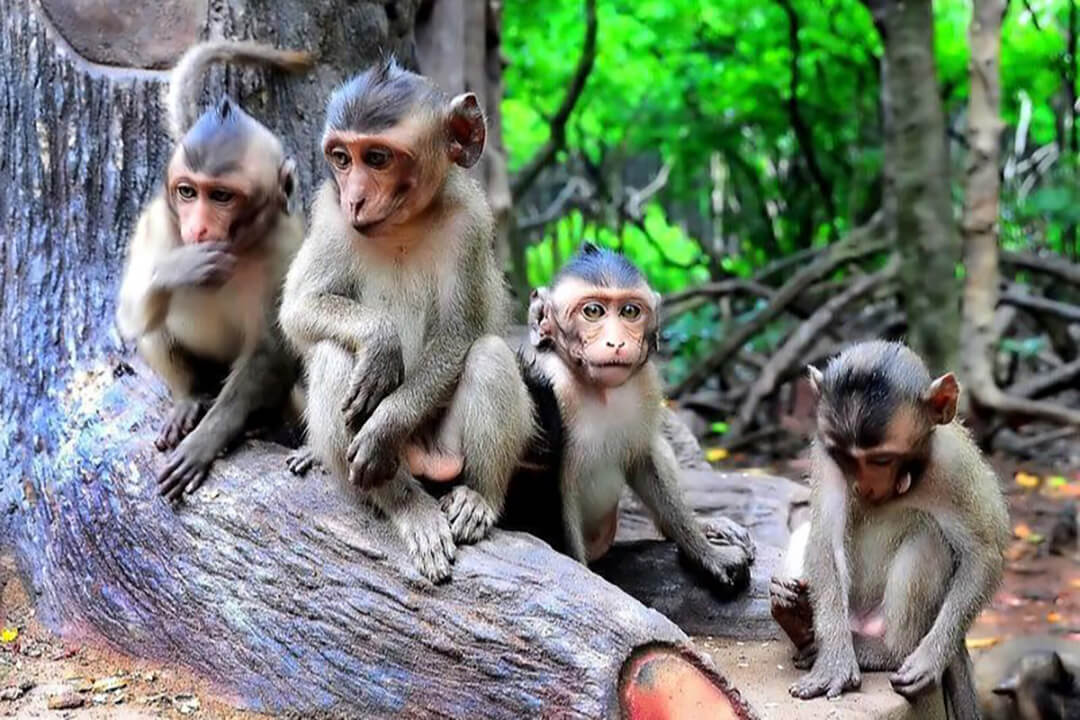
Can Gio Monkey Island in Ho Chi Minh City offers a refreshing escape from the city’s buzzing motorbike chaos. Just a short distance from the center, Can Gio welcomes you with lush mangrove forests, winding waterways, and a fascinating history. Here, you can meet playful long-tailed macaques, drift through tranquil channels, and explore remnants of a wartime guerrilla base.
Can Gio Monkey Island in Ho Chi Minh City: Tickets, Things to Do & Travel Guide
Cu Chi Tunnels: History, Architecture, Things To Do & Travel Guide
Cu Chi Tunnels
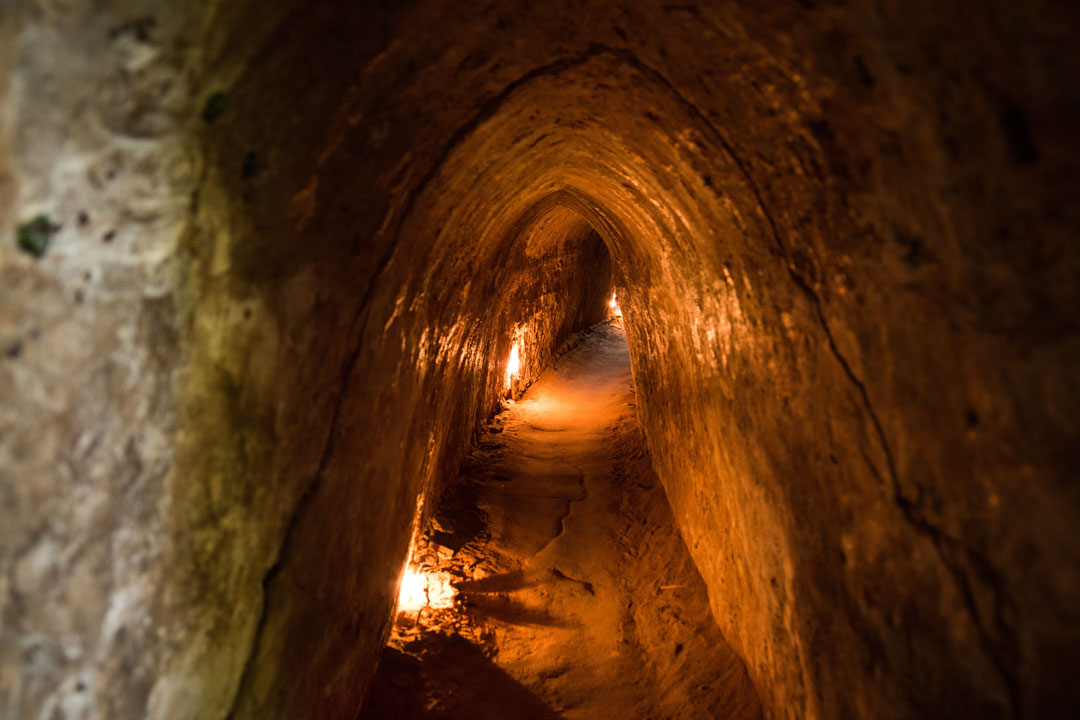
The Cu Chi Tunnels, located at TL15, Phu Hiep, Cu Chi District, Ho Chi Minh City, are a vast underground network of strategic passages, shelters, supply routes, and defensive traps.
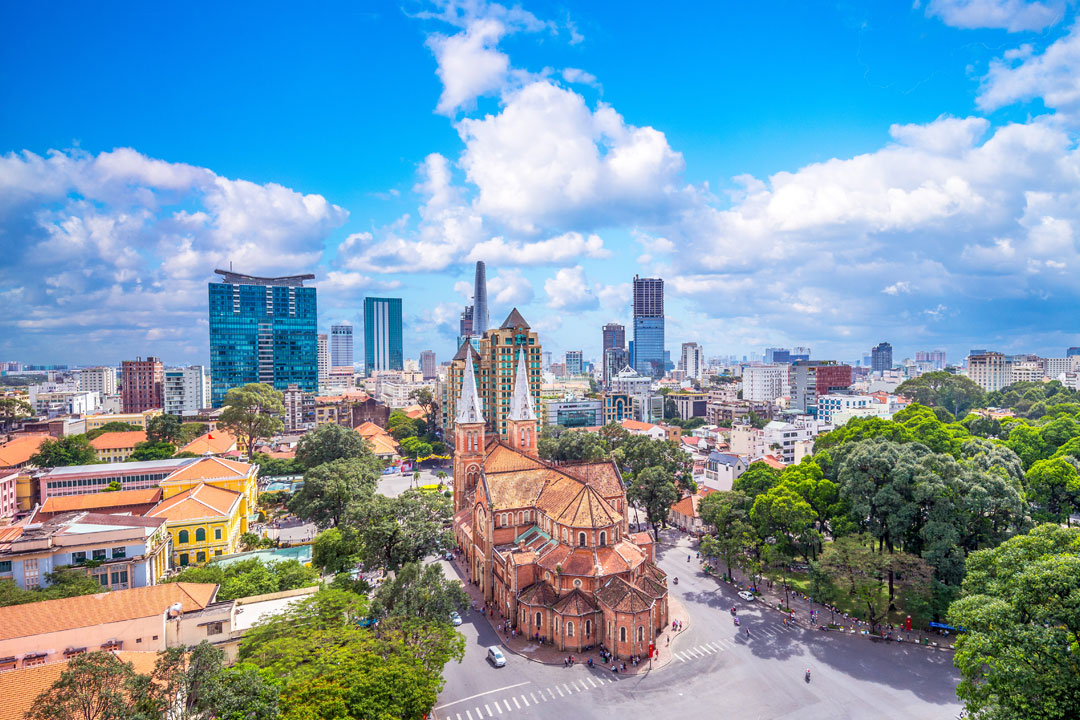
Ho Chi Minh City
Ho Chi Minh City, known as the "Pearl of the Far East," attracts both domestic and foreign tourists with its unique and diverse destinations.
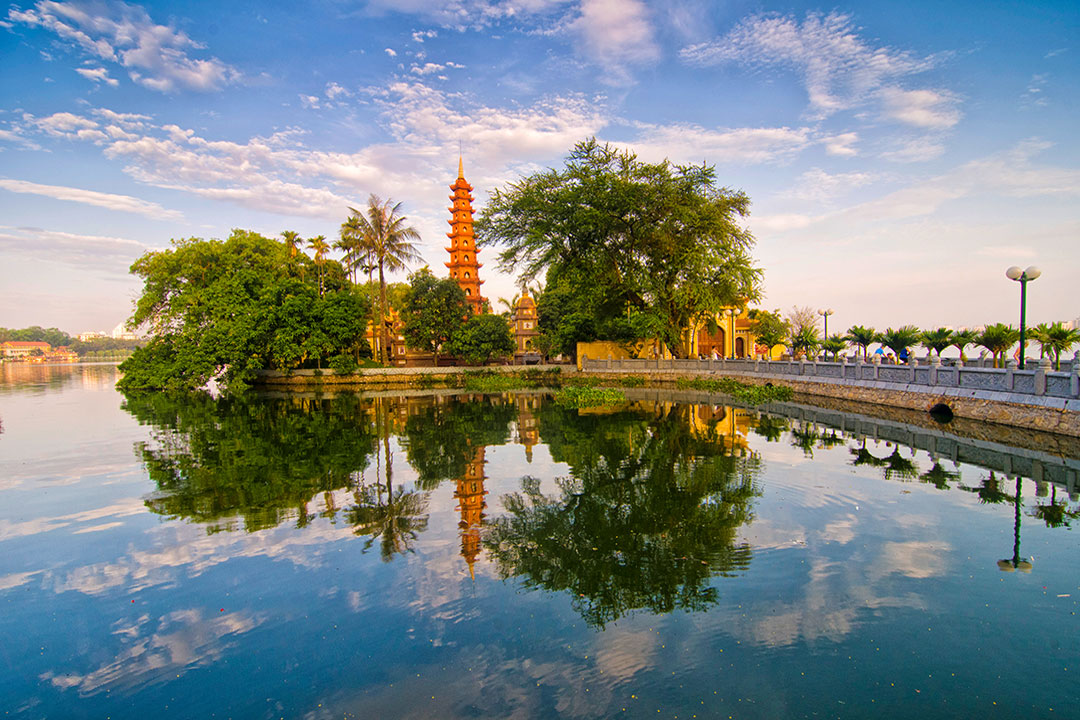
Tran Quoc Pagoda: History, Architecture, Significance & Travel Guide
Tran Quoc Pagoda
Nestled on the tranquil shores of West Lake, Tran Quoc Pagoda is the oldest Buddhist temple in Hanoi, with a history spanning over 1,500 years. Built in the 6th century under Emperor Ly Nam De, this sacred site reflects Vietnam’s Buddhist evolution while preserving its spiritual and architectural grandeur.